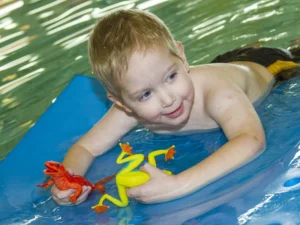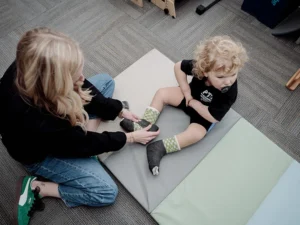


Sensory processing differences are common in children with autism. Some children are highly sensitive to touch, sound or movement. Others seek extra sensory input in order to feel regulated. At Pediatric Therapy Center, aquatic therapy offers a calm, structured setting that supports sensory regulation and emotional balance.
Water gives steady, full-body sensory input that can help organize the nervous system and improve engagement.
Hydrostatic Pressure and Deep Sensory Input
Water applies gentle, even pressure across the whole body. This hydrostatic pressure provides deep sensory input. It can have a calming effect, improve body awareness, reduce feelings of sensory overload and support attention and focus.
For many children, this consistent feedback creates a sense of safety and stability that is hard to find in a busy room.
The Power of Predictable Routines
Aquatic therapy sessions at Pediatric Therapy Center follow structured routines. Predictability can lower anxiety and increase participation for children who do best with consistency.
Clear expectations and guided activities help children move more smoothly from one task to the next, stay engaged longer and build trust in the therapy setting. Over time, they also build emotional regulation skills they can use elsewhere.
Supporting Emotional Regulation and Participation
The pool often feels less overwhelming than a busy therapy gym. Warm water, rhythmic movement and a supportive therapist can reduce stress and increase comfort.
A regulated child is better able to follow instructions, take part in motor tasks, practice social interaction and attend therapy consistently. Better regulation during therapy can carry over to better focus and emotional control in daily routines.
An Individualized Approach
Every child’s sensory profile is unique. Our therapists evaluate each child’s strengths and challenges before building a personalized aquatic therapy plan. Sessions may work on sensory modulation, body awareness, postural control, attention and engagement, and participation in everyday activities.
Aquatic therapy is often combined with other services. Many children also work with our team in pediatric occupational therapy, where sensory processing is a common focus, so that progress in the pool supports progress at home and school.
More Than Movement Practice
Aquatic therapy offers more than movement practice. It gives children with autism a calm, supportive place to build regulation, confidence and functional skills. For the motor side of the picture, see our article on pediatric aquatic therapy for autism.
Next Steps
To learn how the program works, visit our pediatric aquatic therapy page. If you have questions about your child’s sensory needs, contact Pediatric Therapy Center or call 402-932-2782. Our Papillion team is glad to help you decide on a next step.