

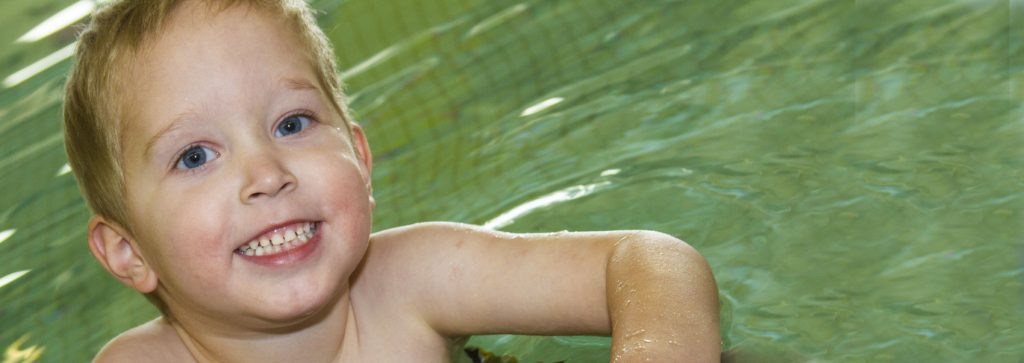
Pediatric aquatic therapy is physical therapy that takes place in a therapeutic pool. At Pediatric Therapy Center, we use it as part of an individualized treatment plan to help children build strength, coordination, balance and functional mobility in a safe and supportive setting.
Water has physical properties that land-based treatment cannot offer on its own. Those properties are the reason a child who struggles to stand or step in the therapy gym can often practice the same skill in the pool.
How Water Supports Movement
Three properties of water do most of the work: buoyancy, resistance and hydrostatic pressure. A therapist uses each one on purpose.
Buoyancy
Buoyancy reduces the effect of gravity, so children move with less pressure on their joints. Movements that are difficult or unsafe on land, such as standing, stepping or holding an upright posture, become possible to practice. More practice means more repetition, and repetition is how motor skills are learned.
Resistance
Water pushes back gently and evenly in every direction. That natural resistance strengthens muscles and builds endurance without weights or equipment. A therapist can make an activity harder or easier simply by changing the speed or depth of the movement.
Hydrostatic Pressure
Water presses evenly on the body. This pressure can improve body awareness, support joint stability and help muscles relax. For some children the steady sensory input is also calming, which we cover in more detail in aquatic therapy for sensory regulation.
Who Can Benefit From Pediatric Aquatic Therapy?
Aquatic therapy can support children with developmental delays, neurological conditions, genetic disorders, orthopedic injuries and balance or coordination challenges. It can also be part of rehabilitation after surgery. Our article on aquatic therapy for children with special needs explains how sessions are adapted for different needs.
Sessions are matched to each child’s developmental level and goals. Treatment plans focus on functional skills such as sitting balance, walking, endurance and safe transitions between positions.
What a Session Looks Like
Aquatic therapy is not simply play in the pool. It is structured and purposeful, and it is guided by licensed pediatric therapists who design each activity to work toward a measurable goal. To a child, a session often feels like a game. To the therapist, every reach, kick and step has a reason behind it.
Aquatic therapy usually works alongside land-based pediatric physical therapy and occupational therapy, so the skills a child practices in the water carry over to home, school and play.
Getting Started
If you think your child could benefit, start with our pediatric aquatic therapy page to see how the program works at our Papillion clinic. You can also contact Pediatric Therapy Center or call 402-932-2782 to ask about an evaluation.