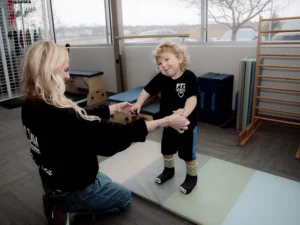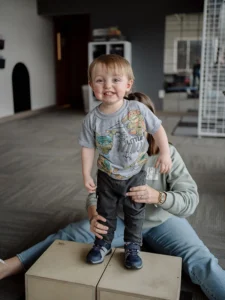

Movement challenges associated with cerebral palsy can affect posture, balance, coordination, and overall mobility. Because cerebral palsy impacts muscle tone and motor control, children may experience delays in reaching developmental milestones such as sitting independently, standing, or walking. At Pediatric Therapy Center, we use Dynamic Movement Intervention (DMI) as a specialized, research-informed approach to support motor development and functional progress in children with cerebral palsy.
Improving Postural Control and Core Stability
Children with cerebral palsy often struggle with trunk control and maintaining upright posture. DMI focuses on activating automatic postural responses through dynamic, carefully guided movements. Rather than passively supporting a child in a position, therapists create controlled challenges that encourage the child to activate core muscles and respond to changes in balance.
This process strengthens head control, trunk stability, and alignment — all foundational skills necessary for sitting, standing, and walking.
Stimulating Neuroplasticity Through Active Movement
Neuroplasticity — the brain’s ability to reorganize and form new neural pathways — plays a critical role in motor development. DMI uses intentional, repetitive, and progressive movement sequences to stimulate this process. By actively engaging the child in dynamic motor tasks, the therapy encourages improved communication between the brain and body.
For children with cerebral palsy, this means building stronger motor patterns that can transfer into everyday functional skills.
Enhancing Functional Mobility
DMI is not just about isolated exercises; it is about improving real-life function. Therapy sessions target meaningful milestones such as:
- Improved sitting balance
- Greater standing endurance
- More efficient transitions between positions
- Assisted or independent stepping
At Pediatric Therapy Center, each child’s DMI program is individualized based on their abilities and goals. We collaborate closely with families to ensure therapy supports independence, confidence, and participation in daily life.