
Powerhouse Intensive Therapy is a structured, goal-driven program that provides focused therapy over a short period of time. Families often ask what makes this model different from traditional therapy, and what the experience is like for their child. This article walks through it.
How an Intensive Differs From Weekly Therapy
In a traditional model, a child usually attends therapy once or twice a week over many months. An intensive concentrates therapy into a shorter block with much more frequent sessions.
The reason is repetition. Skills are learned through practice, and frequent sessions leave less time between visits for a new skill to fade. We explain the thinking behind this in why early intensive therapy matters.
Individualized Treatment Planning
Every intensive begins with a comprehensive evaluation. Our pediatric therapy team works together to decide on the most effective combination of services for your child.
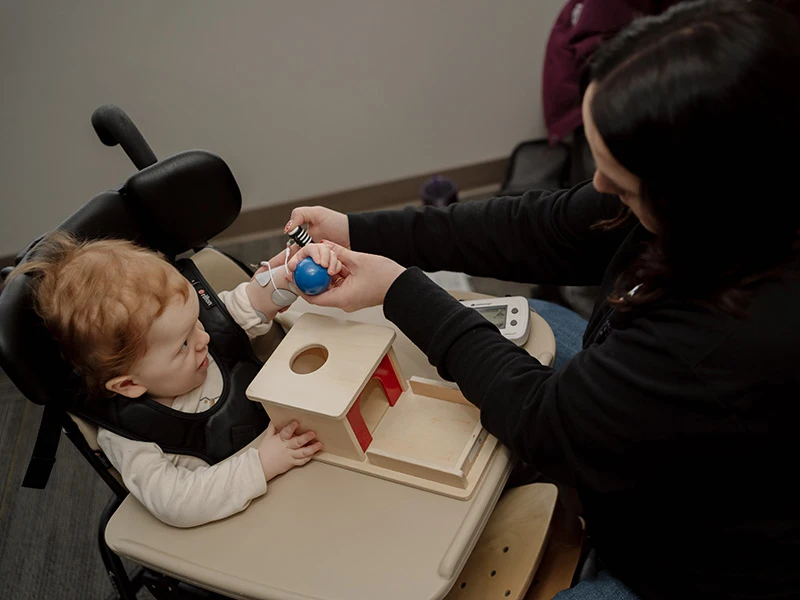
That combination may include pediatric physical therapy, occupational therapy and speech-language therapy. For children working on motor skills, the plan may also include Dynamic Movement Intervention (DMI).
Goals You Can Measure
Each session has a purpose and is tied to measurable goals. Examples include improved walking endurance, increased trunk stability, clearer communication and greater independence with daily tasks.
Goals are set with you, not just for you. You know your child best, and the goals that matter most are the ones that make daily life easier for your family.
A Structured and Supportive Environment
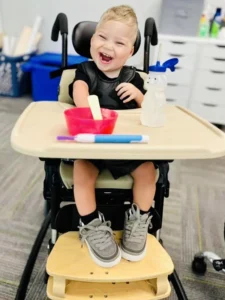
Powerhouse Intensive Therapy is focused and results-driven. It is also child-centered and engaging. Our therapists balance challenge with encouragement so that children make progress while staying motivated and confident.
Intensive therapy is hard work for a child. Play, breaks and variety are built into sessions so that the work stays enjoyable.
Your Role as a Parent
Families are part of the team. During an intensive, your therapists will share what they are working on and show you ways to practice at home. Carrying skills into daily routines helps them last after the intensive ends. Our article on making a home program work has practical ideas.
After the Intensive
At the end of an intensive, your therapists review progress against the goals you set together. Many children then return to regular weekly therapy to maintain and build on their gains. Some families plan another intensive later as new goals come up.
Is an Intensive Right for Your Child?
An intensive can suit children with motor delays, neurological diagnoses or communication challenges, and families who want to focus on a specific goal. The best way to find out is to talk with us. Contact Pediatric Therapy Center in Papillion or call 402-932-2782 to ask about availability and an evaluation.