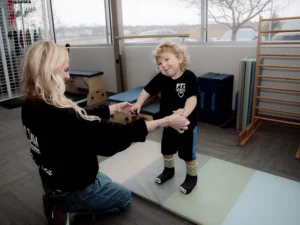


The early years of a child’s life are a critical period for development. During the first five years, the brain experiences peak neuroplasticity — the ability to form, strengthen, and reorganize neural connections. At Pediatric Therapy Center, the Powerhouse Intensive program is designed to take full advantage of this developmental window through high-frequency, targeted therapy.
When therapy is delivered consistently and repetitively during this stage, children have greater opportunities to strengthen motor pathways, improve communication skills, and build functional independence.
Understanding Neuroplasticity
Neuroplasticity allows the brain to adapt and learn through repetition and experience. The more frequently a child practices a specific movement or communication task, the stronger those neural connections become.
Intensive therapy supports this process by:
- Increasing repetition of targeted tasks
- Providing consistent daily practice
- Reducing gaps between therapy sessions
- Reinforcing skill retention
This approach is especially beneficial for children with motor delays, neurological diagnoses, or communication challenges.
Why Frequency Matters
Traditional therapy models often include one or two sessions per week. While beneficial, progress may be gradual due to limited repetition.
The Powerhouse Intensive increases therapy frequency to accelerate progress, support motor learning, and help children achieve meaningful milestones within a concentrated timeframe.
At Pediatric Therapy Center, our goal is to maximize each child’s developmental potential during the years when the brain is most adaptable.