
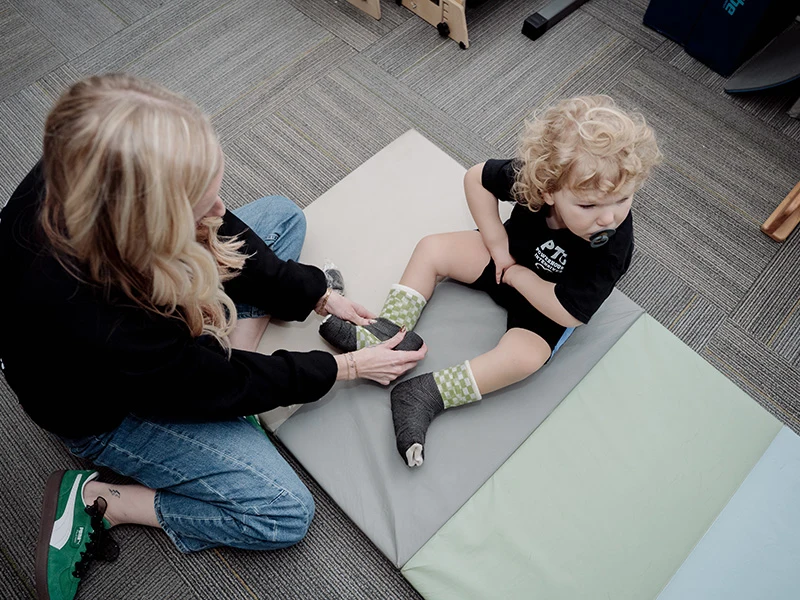
When a child’s alignment improves, the impact extends far beyond posture. At Pediatric Therapy Center, Dynamic Flex Casting is used as part of a comprehensive therapy plan to support improved joint positioning and more efficient movement patterns. The goal is not simply better alignment in the clinic — it is meaningful, functional progress families can see in everyday life.
Dynamic Flex Casting provides structured, flexible support that helps guide joints into improved positioning while still allowing active movement. As alignment improves, children often demonstrate noticeable changes in strength, balance, endurance, and confidence.
Increased Standing Tolerance
Standing requires coordinated muscle activation and postural stability. When joint alignment is compromised, muscles must work harder to maintain an upright position, leading to quicker fatigue.
Dynamic Flex Casting supports improved positioning at key joints, such as the ankles or knees, allowing the body to work more efficiently. Families may begin to notice that their child can stand for longer periods with less effort. Increased standing tolerance supports participation in classroom activities, playtime with peers, and daily routines at home.
Improved Walking Patterns
Walking is one of the most complex motor skills a child develops. It requires strength, coordination, balance, and proper alignment throughout the lower body.
When alignment improves through Dynamic Flex Casting, children may begin to demonstrate smoother, more symmetrical walking patterns. Steps may appear more controlled, foot placement may improve, and overall gait efficiency may increase. These changes can reduce compensatory movements and help preserve joint health over time.
Improved walking patterns often lead to increased independence in navigating home, school, and community environments.
Better Balance and Postural Control
Balance depends heavily on alignment. When the body is positioned properly, the center of gravity is more stable, making it easier to maintain posture and respond to movement.
Dynamic Flex Casting helps support this improved positioning, which can enhance trunk control and stability. Children may show improved balance when standing still, transitioning between positions, or moving across different surfaces.
Greater postural control contributes to safer mobility and increased confidence during physical activities.
Reduced Fatigue During Movement
Inefficient movement requires more energy. When children compensate for poor alignment, muscles often work harder than necessary, leading to early fatigue.
By guiding joints into improved positioning, Dynamic Flex Casting promotes more efficient muscle activation. As movement becomes more coordinated, children may demonstrate increased endurance during therapy sessions, play activities, and daily routines.
Reduced fatigue allows children to participate more fully in meaningful activities.
Greater Confidence in Mobility
Functional progress often brings emotional growth. When children feel more stable and capable in their movements, they are more likely to explore, try new activities, and engage with peers.
Dynamic Flex Casting supports improved alignment that can lead to stronger motor patterns and increased independence. As children experience success — whether standing longer, walking more smoothly, or maintaining balance — their confidence grows.
Confidence plays a critical role in long-term development, encouraging continued participation and skill-building.
Supporting Independence Through Dynamic Flex Casting
At Pediatric Therapy Center, Dynamic Flex Casting is never used in isolation. It is integrated into a comprehensive therapy plan that may include strengthening, gait training, neuromuscular re-education, or intensive therapy programs.
The ultimate goal is functional independence. Improvements in standing tolerance, walking efficiency, balance, endurance, and confidence all contribute to a child’s ability to participate more fully in daily life.
When alignment improves, real-world progress follows.
If you would like to learn whether Dynamic Flex Casting may benefit your child, our pediatric therapy team is available to provide a comprehensive evaluation and individualized recommendations.
Learn more on our Dynamic Flex Casting page, see who can benefit from Dynamic Flex Casting, or contact Pediatric Therapy Center in Papillion at 402-932-2782.